
Cultural
Paro Valley
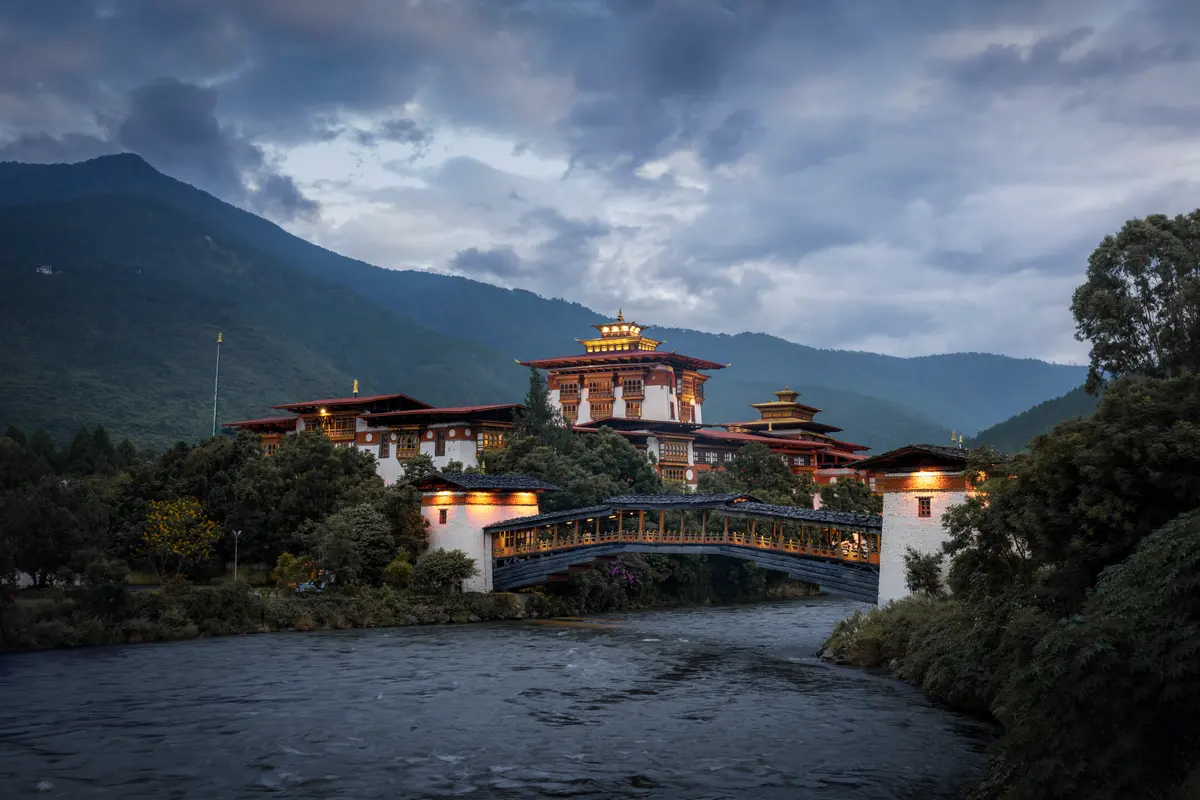
Taktsang Monastery, Rinpung Dzong, and the country’s only international airport.
Paro International Airport is served by two carriers. Overland entry is possible at Phuentsholing, Gelephu and Samdrup Jongkhar. All visitors other than nationals of India, Bangladesh and the Maldives must book through a licensed operator.
Bhutan’s flag carrier, operating from Paro to Delhi, Kathmandu, Bangkok, Singapore, Dhaka, Kolkata, Guwahati, Bagdogra and Gaya. Domestic services connect Paro with Bumthang, Gelephu and Yonphula.
Bhutan’s first private international airline, connecting Paro with Bangkok, Kathmandu, Delhi and Kolkata. Schedules are seasonal and change between the summer and winter timetables.
Members build trips around what a guest actually wants to do. These are the experience categories most commonly requested.
Multi-day routes from the gentle Druk Path to the three-week Snowman Trek, crossing passes above 5,000 m with full camp support.
Day walks around Paro, Thimphu and the central valleys — accessible ways to reach dzongs, lhakhangs and viewpoints without a multi-day itinerary.
Over 700 recorded species across altitude bands, from the black-necked cranes of Phobjikha to Zhemgang’s broadleaf forest specialists.
Backstrap weaving in Khoma and Lhuentse, thangka painting, and the thirteen traditional arts practised across the dzongkhags.
Dzong fortresses, cantilever bridges and rammed-earth farmhouses — Bhutan’s building tradition read through the guides who explain it.
Protected corridors and community-managed forest linking more than half the country, supporting wildlife tourism that funds local conservation.
Registered village homestays that put visitor spending directly into rural households, alongside the standard hotel and lodge network.
Estimate your itinerary’s carbon footprint in under a minute, and get Bhutan-specific ways to lower it — hydropower EVs, eco-lodges and more.
Every visitor group travels with a licensed Bhutanese guide. Guides are certified by category: cultural, trekking and specialist endorsements such as birding, and must hold current certification to work.
For treks, horse contractors provide pack animals and handlers. ABTO maintains the horse contractor list used by members when planning multi-day routes, alongside the campsite allocation rules set out in the trekking regulations.
Booking through a licensed operator is required for most nationalities, but it is also the practical route. Your operator handles visa processing, route permits for restricted areas, transport, licensed guiding, accommodation and the Sustainable Development Fee.
They also carry local knowledge that changes an itinerary from adequate to memorable: which valley is at its best this week, which festival dance is worth waiting for, and which trail is passable after rain.
Find a Member OperatorThere is no single best month, only a best season for what you want to see. Your operator will match the trip to the season, not the other way around.
Rhododendrons and magnolia bloom across the mid-hills, skies clear after winter, and the first major tshechus of the year draw crowds to Paro and Punakha. Comfortable trekking at low and mid elevation.
The monsoon fills the valleys with rice-planting green and fewer visitors. Higher passes turn muddy or close, but this is the season for lowland culture, waterfalls and quieter dzongs.
Bhutan’s peak season: the clearest mountain views of the year and the largest tshechus, including the Thimphu Tshechu. The reliable window for high-altitude treks such as the Snowman.
Cold, dry and quiet, with crisp light over the dzongs and the black-necked cranes wintering in Phobjikha. Lower valleys such as Punakha stay mild even as high passes close.
Bhutan rewards a visit in any month: festivals, trekking windows, wildlife and crowd levels each peak at a different time of year, so the right season depends on what you want from the trip, not a single calendar window. Bhutan is a year-round destination.